Dr. Dario Azzellini said Abdullah Öcalan must be included in the negotiation process, arguing that a lasting peace and political solution depend on his participation
Azzellini: Öcalan must be part of peace negotiations
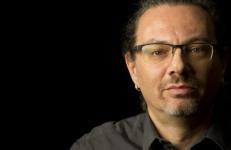
In recent days, Italian sociologist and activist Dr. Dario Azzellini, one of the signatories of an international open letter drawing attention to the regime of absolute incommunicado detention imposed on Abdullah Öcalan and the struggle for the "right to hope," argued that the practice constitutes not only a legal violation but also a deliberate socio-political mechanism.
Known for his work on workers' councils, self-governance models and social movements in Latin America, Azzellini spoke to ANF about the isolation regime on Imralı Island, the structural intersections between the model of Democratic Confederalism in Rojava and grassroots organizations in Latin America, and the emerging alliances between workers and society in response to the global crisis of capitalism.
You recently signed an open letter highlighting the regime of absolute incommunicado detention imposed on Kurdish leader Abdullah Öcalan on Imralı Island and the struggle for the "right to hope." As both a sociologist and an activist, you have expressed solidarity with the Kurdish movement in this case. More broadly, do you see the complete isolation of political leaders merely as a legal violation, or as a deliberate socio-political mechanism aimed at preventing conflict resolution and suppressing the will of the people?
Without question, it is one of the gravest and most explicit human rights violations used to punish resistance that challenges state authoritarianism in representative democracies and homogenized parliamentary systems. Rights are often recognized only as long as they do not disturb those in power, and we see this in many parts of the world. In the specific case of Kurdistan, however, we have seen how ruling powers have turned issues that are not inherently so into ethnic, national or religious conflicts in order to maintain their mechanisms of control. We know that different peoples are capable of living together, sharing the same space and respecting one another. Yet these differences are repeatedly instrumentalized by those in power to preserve control and divide societies.
In this context, the most viable proposal for a multinational, multilingual and multiethnic society has come from the Kurdish forces. The concept put forward by Abdullah Öcalan has offered a possible path out of a protracted conflict. The key to a solution lies in the model that has been put into practice in different parts of Kurdistan. The person with the charisma, theoretical vision and leadership to conduct this negotiation process is Öcalan. Imprisoning and isolating him is therefore an attempt to make a solution impossible and to discredit the Movement internationally. When you isolate someone, people who are unfamiliar with the issue naturally assume, "If he is in prison, he must have done something wrong." That is the image projected to the outside world.
I believe this regime of isolation serves several purposes. First, it prevents political forces from engaging in a broad public debate. Such a debate requires Öcalan to be able to participate. People from different sides come together and talk; that is how conflicts are resolved. If you do not allow that to happen, it means you do not want a solution.
Second, it seeks to discredit the Kurdish Movement and Kurdish demands internationally. We constantly read unfounded claims in the media suggesting that "the Kurdish forces will now fight on behalf of this side or that side." The Movement is then forced to respond by saying, "We are nobody's servants."
One point must be made absolutely clear: if you want peace, if you want any kind of solution, then you must ensure that Öcalan is part of the negotiations. Öcalan represents a movement that does not seek ethnic supremacy but instead strives for a model through which all the different peoples of the region can build a democratic society based on mutual respect.
Democracy must be different everywhere to be truly democratic
Your work has focused extensively on workers' councils, occupied factories and grassroots organizing, particularly in Latin America and Venezuela. Looking at the model that Kurdish leader Abdullah Öcalan conceptualized as Democratic Confederalism, we see it being put into practice in Rojava. Where do you see the points of convergence between your research on factory and neighborhood councils and this model of democratic autonomy? Has Rojava's practical experience opened up new perspectives within your own theoretical framework?
Yes, I think the concept of Democratic Confederalism is part of the broader range of approaches we see internationally for building a more democratic society. A democratic society means that the people affected by particular decisions are the ones who make those decisions. That means workers deciding directly about the production process, while communities, or communes, decide what they want to produce or what they need. Democracy means bringing decision-making to the very place where the people affected by those decisions are located. That is precisely the proposal we see in Democratic Confederalism and, in particular, in the structures established in Rojava through councils at different levels, women's assemblies and various intersecting forms of organization.
I believe one of the greatest mistakes of the West and liberal democracy is the assumption that there is a single universal model of democracy that should look the same everywhere. That is completely wrong. Democracy must be different everywhere in order to be democratic, because every place has its own traditions and forms of communication. It must therefore adapt to local conditions and be built by the people themselves.
Of course, there is no ready-made model. We are talking about an extremely difficult situation shaped by external wars, embargoes, and economic and military pressure. Under such conditions, no one can expect an ideal system to emerge overnight. It is a process of learning. For example, the principle of the commons, applied in Rojava to land and buildings through rights of use, is an extremely progressive idea. If a property is not being used for the public good, communities immediately gain the right to use it. This does not remain a theoretical concept; it provides people with concrete solutions through a shared and collective process.
As a sociologist who has studied Paris Commune, communal structures in Latin America and Rojava, I have reached the conclusion that these experiences are not copying one another. The search for treating each other as equals and finding collective solutions is an organic impulse that exists deep within people. Rojava represents a model in which people themselves decide what kind of economy they need, rather than one in which the economy dictates how people should live. That is why, like the Zapatistas in Mexico or the communal movements in Venezuela, Rojava is an extremely important experience from which we can all learn and through which we can build a shared future on a global scale.
Class struggle is not confined to the factory
Finally, let's talk about building bridges between social movements. How can organic links be forged between the traditional, institutionalized labor and trade union movements in the West and the radical democratic, ecological and communal movements of the Middle East, or the grassroots movements of Latin America? What can these traditions learn from one another in the context of the global crisis of capitalism?
Traditional trade unions need to change in the era we are living in. Otherwise, they will not be able to intervene effectively on behalf of the working class. This transformation is taking place slowly in some unions. But the key point we need to reach is this: class struggle and the struggle against capitalism are not confined to the workplace or the factory.
The contradiction between labor and capital does not have to be limited to the traditional workplace. Class formation can also take place in neighborhoods. Struggles for decent living conditions, housing, clean water or infrastructure in impoverished communities are all, at their core, forms of class struggle. Wealthy people are not affected by these problems. Not all of us work in factories; recognizing this structural change is essential.
Another crucial issue is that the socio-ecological movement and the labor movement must come together. Workers and their communities are the only social force with a genuine interest in socially and ecologically sustainable production. They are also the people most affected by climate change and environmental destruction. Workers understand better than anyone how society should be transformed. As I observed in occupied factories, once workers take control, they immediately begin thinking about healthier and more ecological forms of production because they are the ones breathing the smoke every day.
We need to return to the understanding that neither class nor the solution exists only in the workplace or only in the community, but in the combination of both. During my research with coal miners in Colombia, I asked them, "What is your relationship with the community?" They looked at me in surprise and replied, "What do you mean? The moment I stop working, I am the community." If you ask the same question in the United States or Germany, however, you will find a sharp division between work and social life. We need to overcome that divide.
We must not allow the ruling powers to divide us
Is there a message or a special appeal you would like to share with ANF readers?
Today, it is vital that we develop a clear sense of solidarity among all people affected by wars, bombings and occupations. We must not allow the ruling powers to divide us through artificial agendas. We need to build a strong global front of common struggle against war and occupation and in defense of the right of peoples to self-determination. Otherwise, the future of humanity looks truly bleak.
Read at AFN News:
Azzellini: Öcalan must be part of peace negotiations
Related Links: