Political Scientist Dario Azzellini on the Attack on Venezuela
“The US Is a Dying Empire”
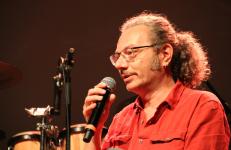
According to political scientist Dario Azzellini, the US attack on Venezuela and the abduction of President Nicolás Maduro do not merely constitute a violation of international law, but its complete collapse. In an interview with Mašina, Azzellini explains why he sees this event as a symptom of a “dying empire,” and at the same time as a prelude to a new, dangerous phase of global conflict.
The attack by the United States on Venezuela and the abduction of Nicolás Maduro, the country’s president, marked the beginning of this year. Judging by the assessments of analysts of global political developments, geopolitical maneuvering, as well as simple observation of today’s increasingly brazen leaders such as US President Donald Trump, this beginning of the year may also be a sign of what lies ahead. The trampling of international law, naked force, and the constant creation of new conflicts.
The attack on Venezuela raised a number of questions, which we discussed with Dario Azzellini, an activist, political scientist, and sociologist, a researcher at the Department of Sociology at the University of Duisburg-Essen in Germany, who spent several years in Venezuela and other South American countries researching the self-organization of workers and local communities in the process of building socialist societies.
“First of all, we have to be clear that this is not an arrest – it is an abduction!” Azzellini states unequivocally at the beginning of the conversation, when asked whether Maduro’s removal could really lead to regime change in Venezuela.
“There is no legal basis for anything. This is not just against international law – this is the end of international law. Not that it was ever very important to them before, but now it is clear that nothing counts anymore,” Azzellini remarked.
The first reports about the attack on Venezuela and the abduction of the president sparked considerable controversy, which, according to Azzellini, also led to claims that Maduro had been handed over by the government itself, or by former Chavistas, in order to establish better relations with the US.
“They also said that there were hardly any battles, which now appears not to be entirely true. For example, Cuba officially announced that 32 Cuban soldiers were killed in the attack because they were part of Maduro’s inner security ring. The New York Times speaks of at least 80 people killed. Several airports were bombed. The US used special technology to disable all communications, the internet, radar systems, everything. So, it is obvious that this was a massive attack, and that there was at least some response. To what extent there was an agreement or not, I cannot say,” Azzellini explains.
He also recalls that Donald Trump, in his address, tried to create the impression that some sort of agreement existed. However, he was later contradicted by Delcy Rodríguez, who, as Maduro’s deputy, temporarily assumed leadership of the country. She announced: “Nicolás Maduro remains the only president and we are a sovereign state,” which then prompted Trump to escalate his rhetoric.
“It’s not clear whether someone actually handed over Maduro, or whether Trump simply, following the logic of a real-estate salesman, thought: ‘Alright, if I do this, they’ll do what I want,’” he adds. After that, Trump threatened to bomb Colombia and do the same to Mexico, and also stated that Cuba’s days were numbered.
As Azzellini explains, there are hints of why a general mobilization was abandoned in Venezuela. The government told people to stay home and continue their normal lives, “which is a strange situation after such an attack.” “On the other hand,” Azzellini adds, “if air-defense systems, missiles, airports, and the like were destroyed during the attack, Venezuela obviously cannot do much against further assaults.”
Nevertheless, Azzellini says: “The main problem in Venezuela, and for the left, is that there is no force that is credible or that has a convincing response to the situation. For Trump, it may even be enough if the regime survives, as long as it can guarantee security so that US oil companies can move in.”
Azzellini, who has spent considerable time in Venezuela, also comments on the fact that no oil company has reacted publicly after Trump announced their arrival in the country. Why? “Because they know that the situation on the ground is not conducive to establishing any kind of US oil sector in Venezuela without an agreement with the population or a broader political settlement. Guerrilla groups and armed militias exist throughout Colombia and Venezuela, and this will not be an easy terrain for anyone,” Azzellini says.
“Based on all this, I think there are several options. One is that Trump neither wants nor needs regime change. He prefers a stable kind of regime that can guarantee oil extraction for US companies. Another option is that there will be some sort of agreement or deal, but I think the crisis will last, because its root cause is a new global division of the world. The US needs oil because it envisions a future based on fossil fuels. It needs rare minerals. That is why Trump wants Greenland. And perhaps most importantly in this context is the role of China – a clear confrontation with the interests of the US’ main rival,” emphasizes.
Clash of Interests
“What is important is that Trump stated after the attack on Venezuela that the Monroe Doctrine has returned” our interviewee says. This refers to the ideology where the US considers the entire Western Hemisphere exclusively its own sphere of influence and views any outside involvement as an attack on its interests.
Azzellini explains that China has massive investments in South America – in Venezuela and across Latin America – and wields far greater influence in the region than the US. This is also because China does not interfere in domestic politics; internal political dynamics and systems are irrelevant to it as long as it can conduct business without obstruction.
“The main enemy or competitor for the US is China. Russia serves as a kind of junior ally or convenient justification for actions. It is obvious that after this attack on Venezuela, it becomes difficult to criticize Russia for its attack on Ukraine. China can take Taiwan, Greenland may be next, and the European Union has become less relevant to the US. It is even becoming a competitor or an enemy – something the EU still does not understand. They are still living in the 1950s and believe the US is their ally,” Azzellini states bluntly.
Playing With Fire and Ice
It is clear that Trump, who has shown an intention to actually implement the Monroe Doctrine, will face China as a powerful adversary in South America. In order to reduce Eastern influence in “America’s backyard,” he will attempt to reshape the continent’s political map according to his own designs.
“The US is undoubtedly a dying empire. Its influence is shrinking, and the main instrument for maintaining that influence is military pressure. This is typical of empires in decline, trying to retain power or control through escalating military force – which clearly does not work in the long run,” Azzellini believes.
He also points out that increased tariff pressure has already proven ineffective in several countries. “The European Union has clearly served the US, but even countries like Brazil, Mexico, or India have pursued their own policies and simply redirected their trade. The US is no longer indispensable to anyone,” Azzellini says, adding that the US no longer has technological advantages either. There is little it produces that Latin American countries cannot manufacture themselves, aside from a few components for specific high-tech products.
“Meanwhile, Chinese companies are taking over former US markets in Latin America. There are Chinese investments in railways, transport, solar panels – almost everything. More broadly speaking, countries with center-left or leftist governments have strong ties with China, such as Brazil through BRICS, but also countries like Peru, which may not be large but is completely under the influence of the Chinese economy. This, in my view, is the main problem for the US, and also one of the reasons many countries have reacted to tariffs and policies as they have – except for smaller countries like El Salvador, which have adopted completely servile policies toward the US. But all the others, at least the major ones except Argentina, are trying to redirect their economies and exports. This is a very dangerous situation, because the only way for the US to maintain and expand control and dominance – which is Trump’s declared goal – is through military action,” Azzellini explains.
Azzellini believes this is an extremely risky and dangerous situation that will almost certainly not stop in South America.
“Just the other day, a special government adviser published a photo of Greenland with a US flag. A special envoy for Greenland has been appointed. Trump has made it clear that the US wants Greenland. The question is whether Europe will understand this – or whether it will continue to play dead and fail to react while the US reshapes the entire global order and creates an absolutely catastrophic situation, ending in a multitude of wars and military conflicts everywhere. According to many analysts, the ultimate goal of the US may be a military confrontation with China,” Azzellini tells Mašina.
Who Defends the Bolivarian Revolution?
To conclude, we reminded Azzellini of an interview he gave us ten years ago, when we discussed Maduro’s poor electoral results, which significantly weakened the Chavista regime. At the time, Azzellini noted that it ultimately did not matter how badly the opposition behaved, and that one should not expect right-wing imperialists or capitalists to build socialism in the name of the people – the left had to confront this reality. Do these arguments still hold today? Are there still forces in Venezuela capable of defending the proclaimed socialist society and democratic values?
“I think so. There are forces that support a socialist society, but the extreme economic crisis and repression against leftist forces over the past several years have clearly diminished these possibilities. There are strong grassroots movements of ordinary people organized around self-managed communes. The government has tried to co-opt and absorb many of them, turning them into its own support structure – in some cases successfully. In others, the relationship is mostly one of conflict and support, conflict and cooperation, and so on. I think there is currently a lack of a broader proposal for social change or a convincing answer to the question of where to go next. How to build a more egalitarian society – because I believe this is still the goal of most Venezuelans. But since there is no credible political project, neither from the left nor the right, neither from Maduro nor from the former Maduro government, I think this is the main difficulty,” Azzellini concludes.
Links zu diesem Artikel: